Sewer Line Repair
Is this another clog, or is the sewer line actually damaged?
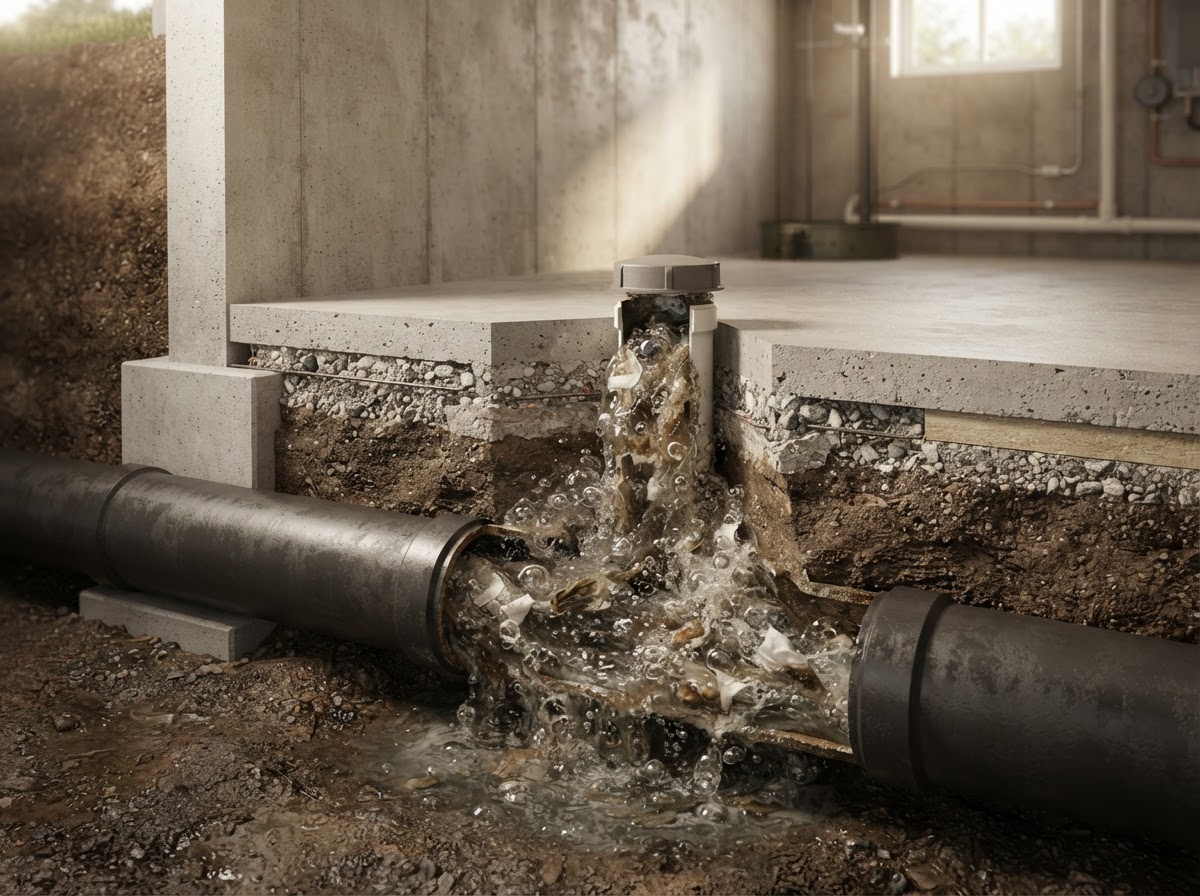
The words 'sewer repair' sound alarming, but not every backup means the line is broken. The path from symptom to repair is built around finding out what's actually going on first, because a damaged line and a clearable clog get very different fixes.
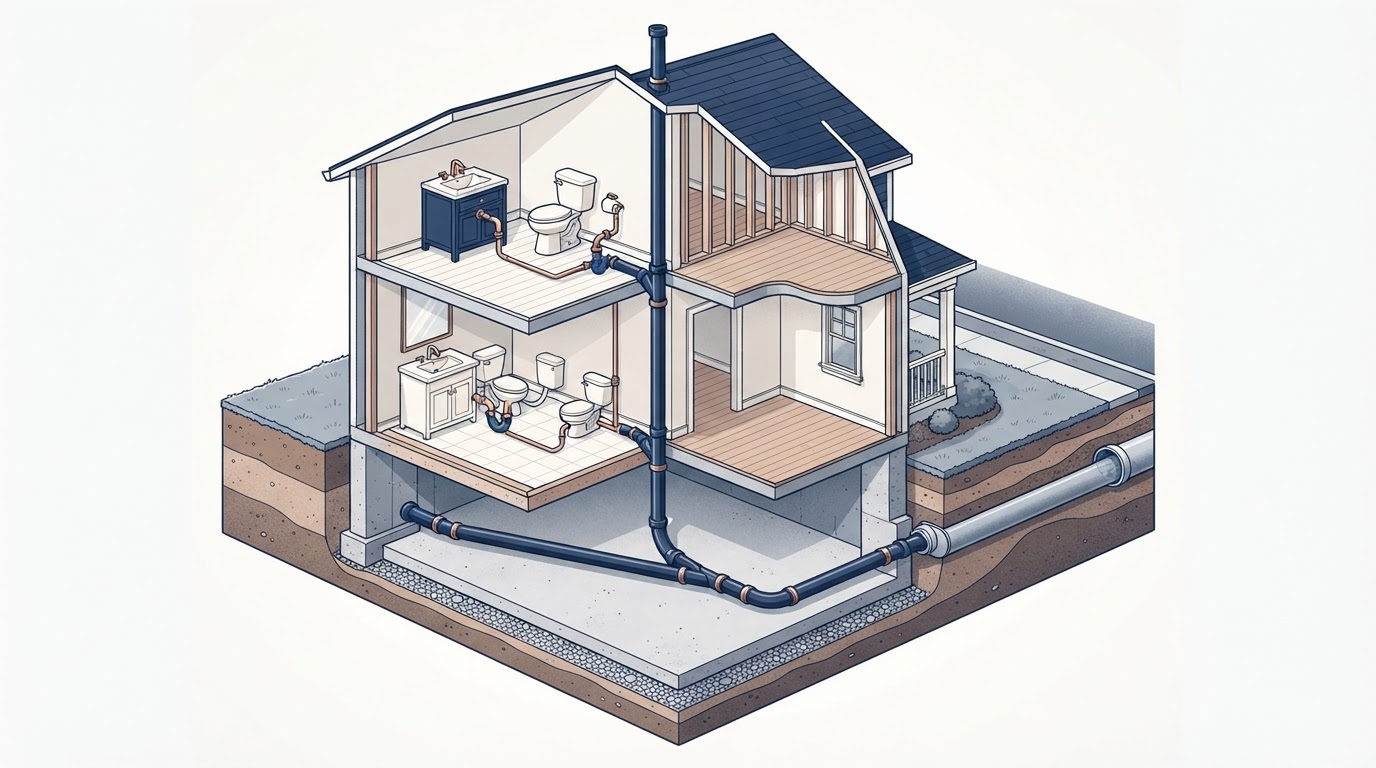
Warning signs
Signs it may be more than a clog
None of these on their own confirms sewer damage, but together they're a reason to inspect rather than just clear.
Multiple fixtures backing up
When more than one drain fails at once, the cause is usually below them, in the main line.
Gurgling from drains or toilets
Air trapped by a restriction or damage can make fixtures gurgle as water tries to pass.
Sewer odors inside or outside
Persistent smells near drains or in the yard can mean the line isn't holding what it should.
Recurring backups after clearing
If clearing holds for a shorter time each round, the line may be damaged, not just blocked.
Slow drains across the home
A whole-house slowdown points to a single shared cause: the main line.
Lush or soggy patches in the yard
An underground leak can feed a patch of grass above the line.
The path from symptom to repair
Symptoms → Inspection → Diagnosis → Repair options
 1Symptoms
Backups, gurgling, or odors suggest the main line is involved.
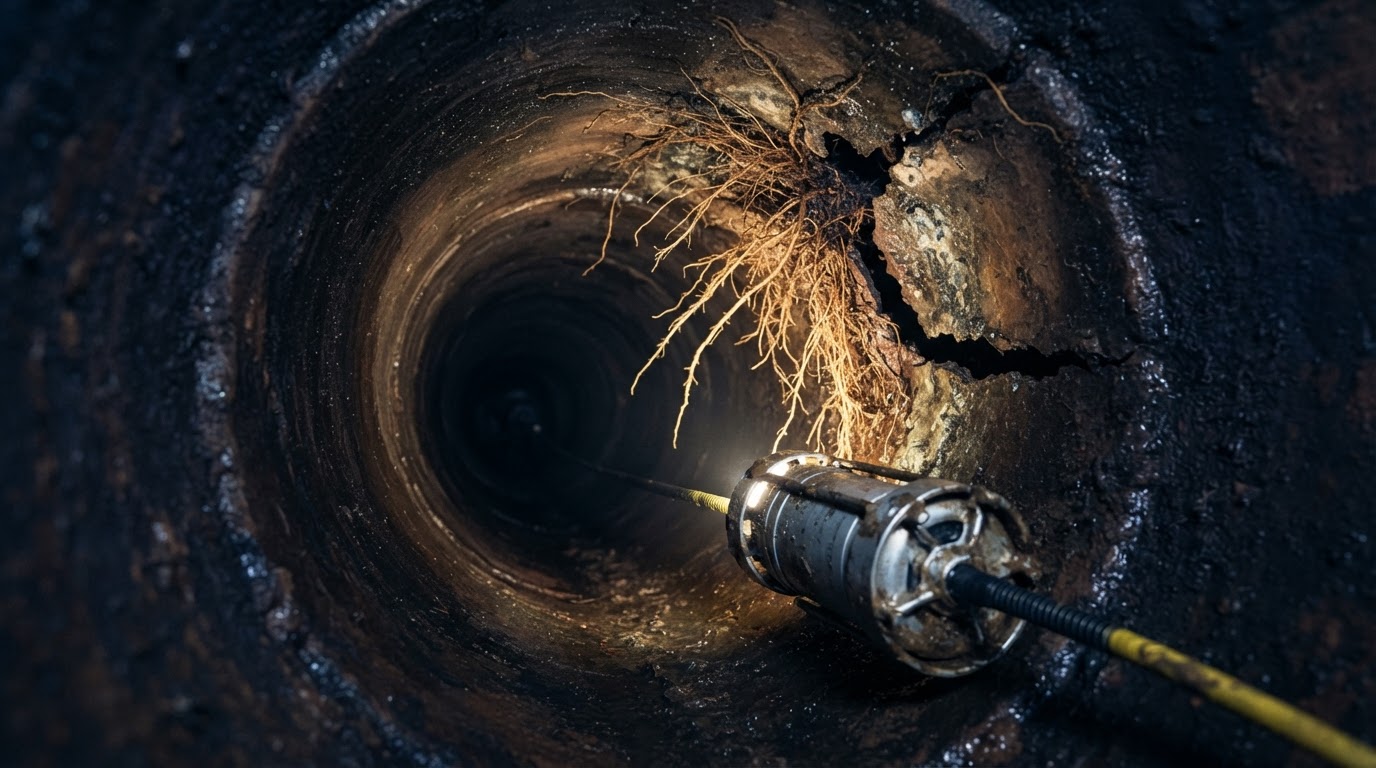 2Inspection
A camera run through the line shows what's actually there.
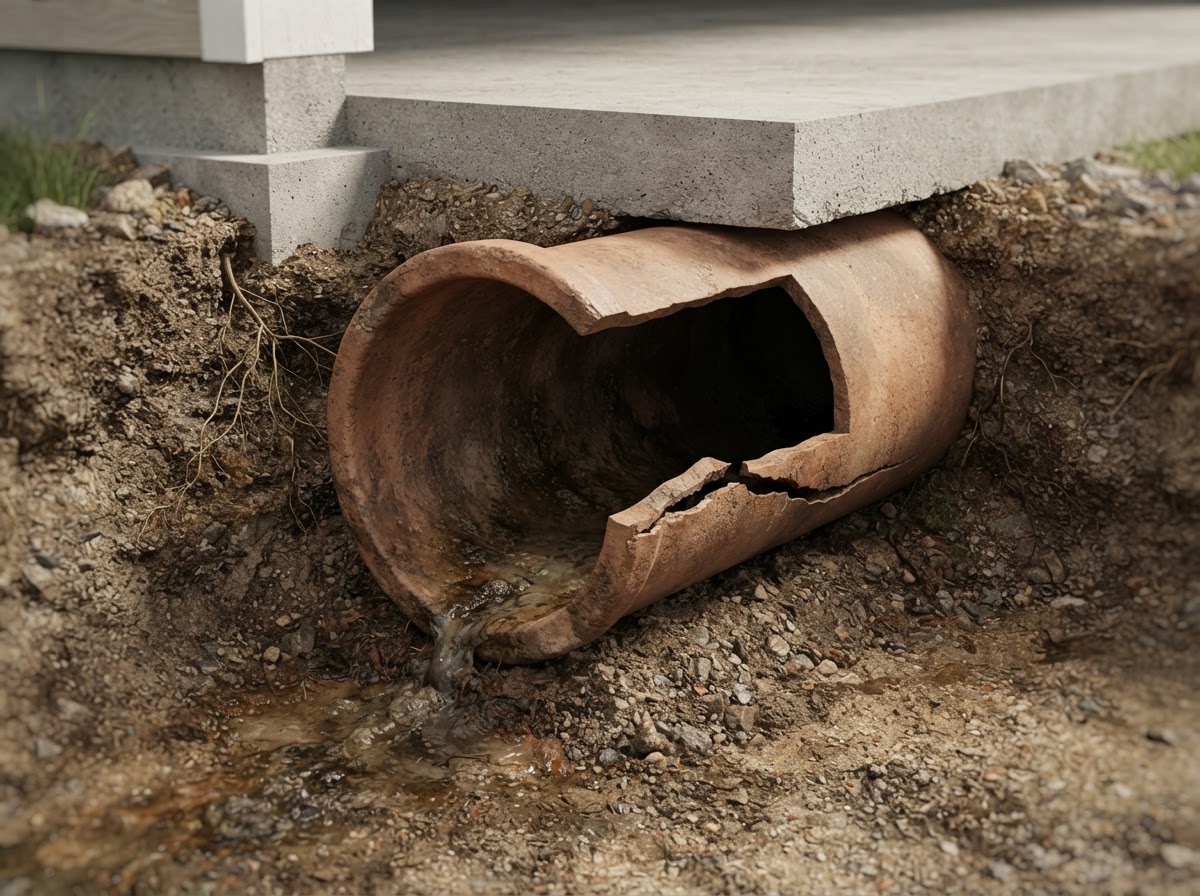 3Diagnosis
Buildup, roots, a crack, or a collapse: each means something different.
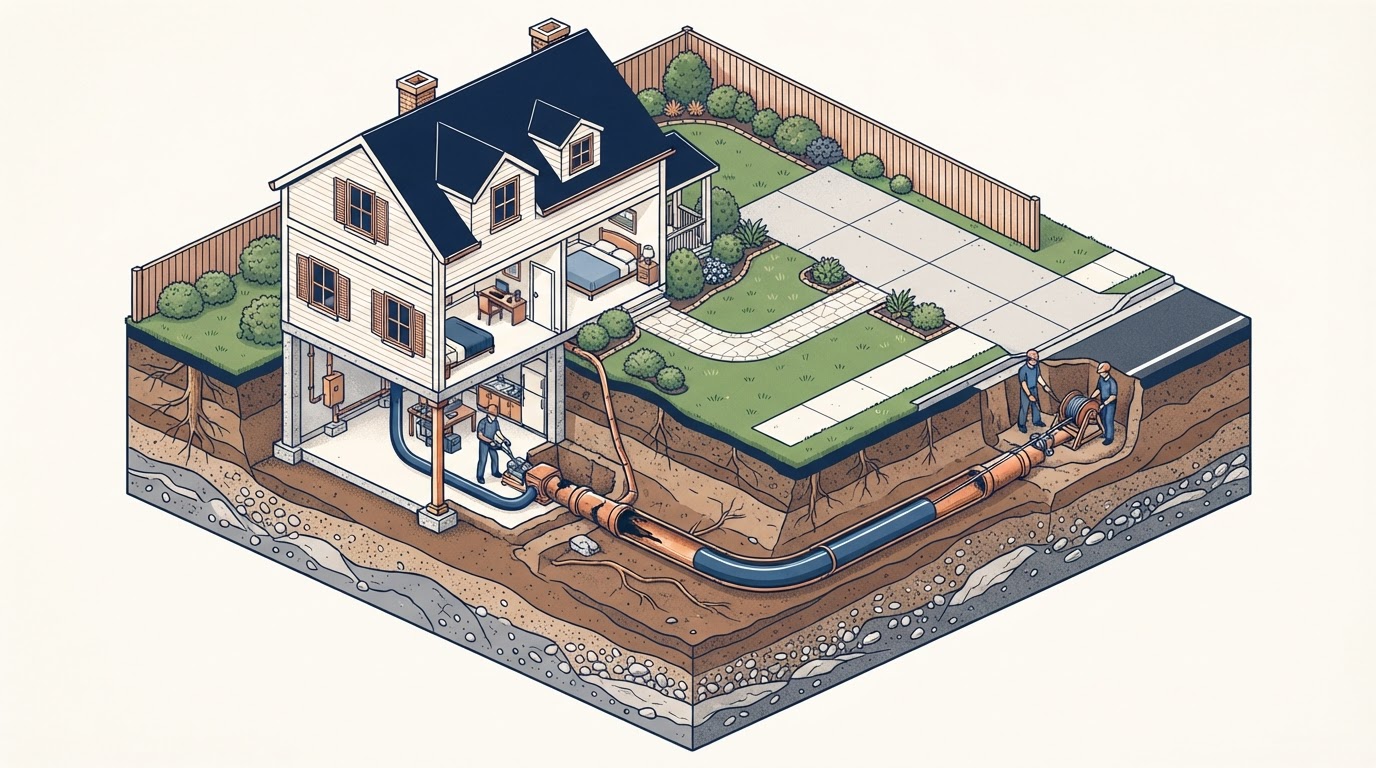 4Repair options
Traditional or trenchless, matched to what inspection found.
Repair options
Two broad approaches
Find out if it's the line before deciding
If multiple drains are backing up or the same one keeps returning, an inspection tells you whether this is a clog or damage, and what repair fits.