Repiping
When patching stops making sense
There's a point where repairing one leak after another costs more, in money, water damage, and disruption, than replacing the supply lines. Repiping is the option for when the system itself, not just one fitting, has become the problem.
Signs the pipes, not just a leak, are the issue
- Leaks that keep appearing in new places
- Visible corrosion, discoloration, or mineral buildup on exposed pipes
- Low or fluctuating pressure across multiple fixtures
- Older supply piping material reaching the end of its service life
- Repeated drywall or ceiling repair chasing the next leak
How repiping is approached
The goal is a system that doesn't keep failing, done with the least disruption that still does the job properly.
- 1
Assess the whole system
Look at material, age, and where failures keep happening to confirm repiping is warranted, not just one bad section.
- 2
Plan the routes
Map new supply lines to minimize drywall openings and keep water working where possible during the work.
- 3
Replace the lines
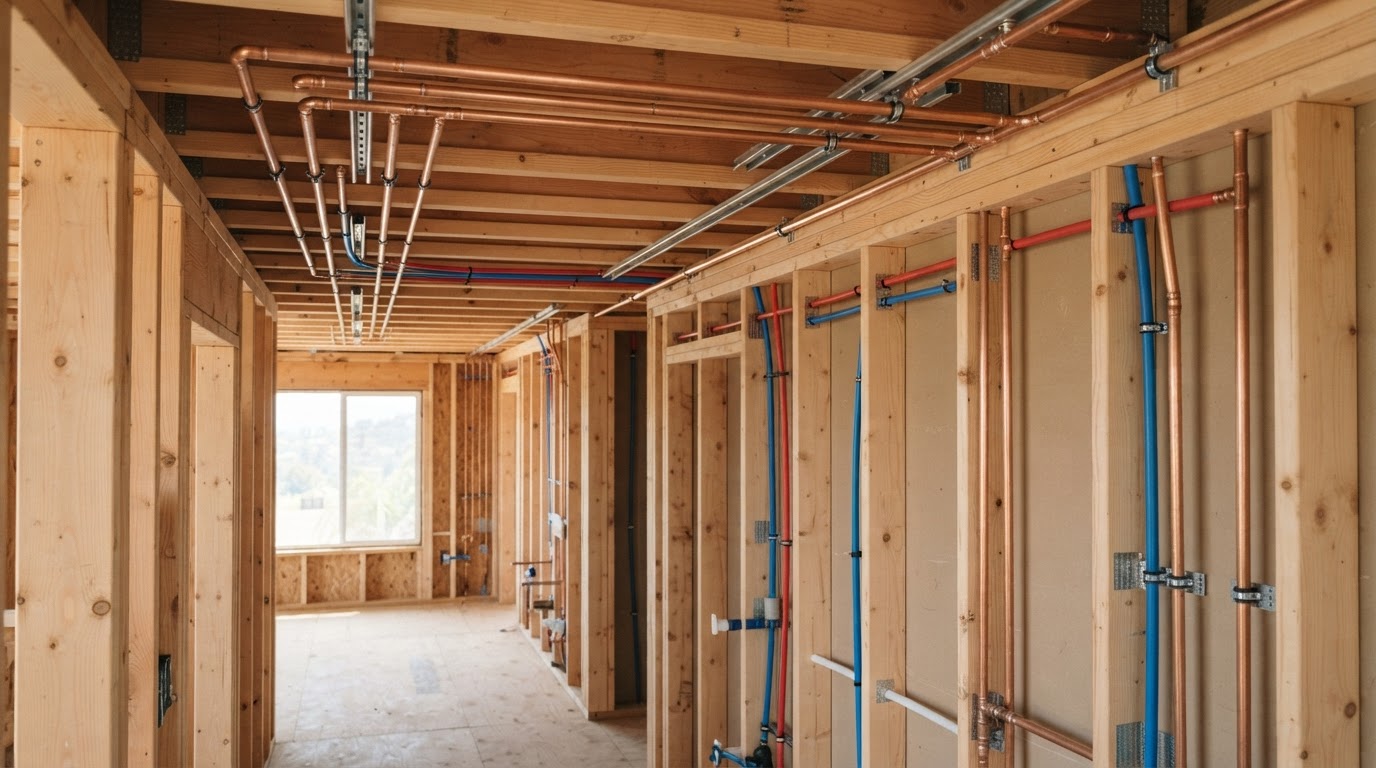
Install new piping, typically copper, PEX, or a combination, sized to the home's demand.
- 4
Restore and verify
Patch access points, pressure-test, and confirm the new system performs before it's done.