Whole-House Repiping
Is it time to repipe the whole house?
Whole-house repiping replaces the home's supply lines as a system, not one leak at a time. It's the option for when the pipes themselves, whether their age, material, or condition, have become the recurring problem, and patching has stopped being a reasonable answer.
When it's the right call
Replacing the system, not chasing the next leak
Every repair fixes one leak. But when leaks keep appearing in new places, the issue is the piping itself, and the next repair is just a different spot on the same failing material.
Repiping addresses the cause across the whole home at once, so the cycle of drywall patches and water damage stops.
Material options
Copper
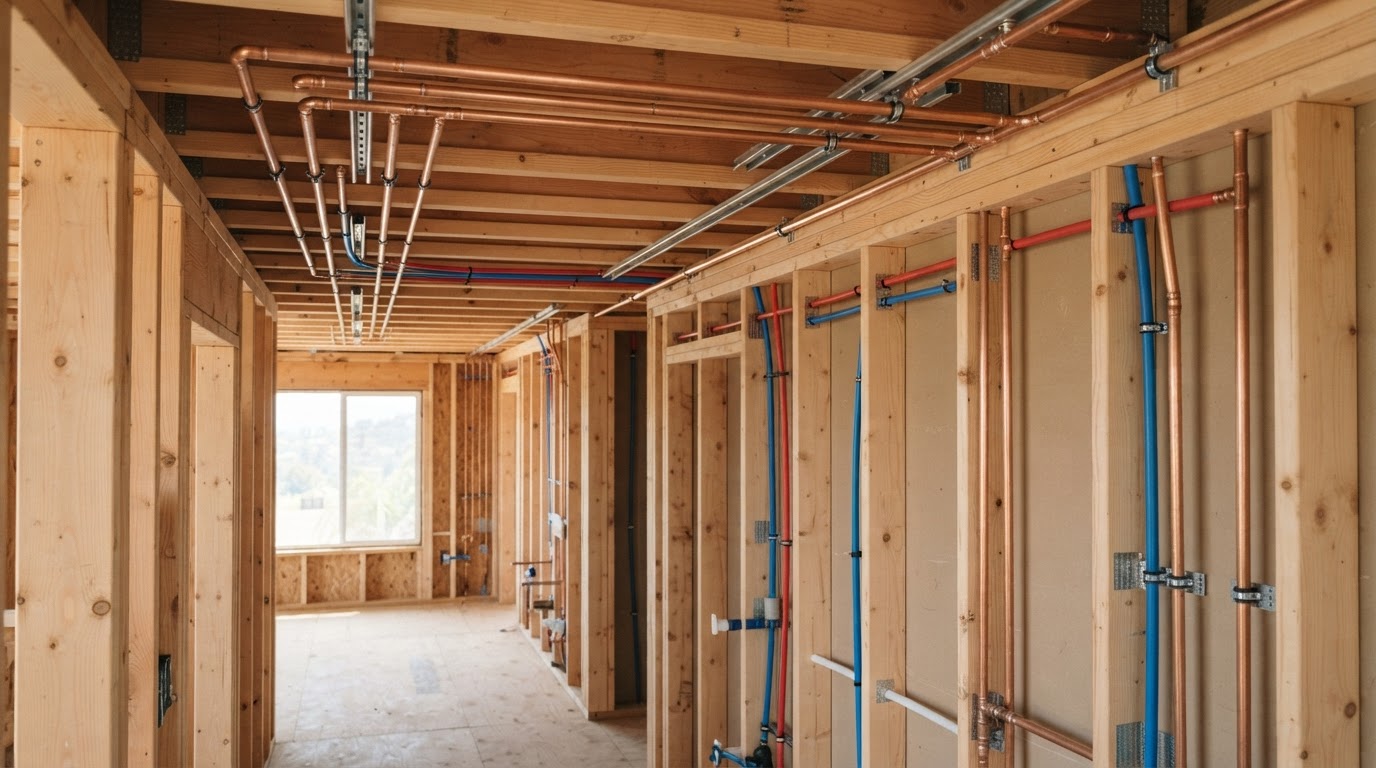
Long-established, durable, and rigid. A traditional choice that performs well when properly installed, at a higher material and labor cost.
PEX
Flexible, faster to install, and resistant to scale. Fewer fittings means fewer potential leak points, often at a lower installed cost.
A combination
Many repipes use both: copper where rigidity or exposure matters, PEX where flexibility and speed help. The mix is planned to the home.
What to expect during a repipe
- 1
Plan & protect
Map routes and protect floors and furnishings before any walls are opened.
- 2
Run new lines
Install the new piping with minimal access cuts, keeping water working where possible.
- 3
Connect & test
Tie the new lines to fixtures and pressure-test the whole system.
- 4
Patch & finish
Close access points and leave the home ready for finishing work.
Wondering if it's time to repipe?
If leaks keep appearing, pressure is inconsistent across fixtures, or your piping is a material reaching end of life, a whole-house repipe may be the lasting fix. Let's look at whether it's warranted.