
Leak Detection
Where is the water actually coming from?
Water shows up where you can see it, but the source is rarely right there. A stain on the ceiling often starts above it; a damp wall hides the pipe behind it. Leak detection is about finding the true source before anything gets opened up.
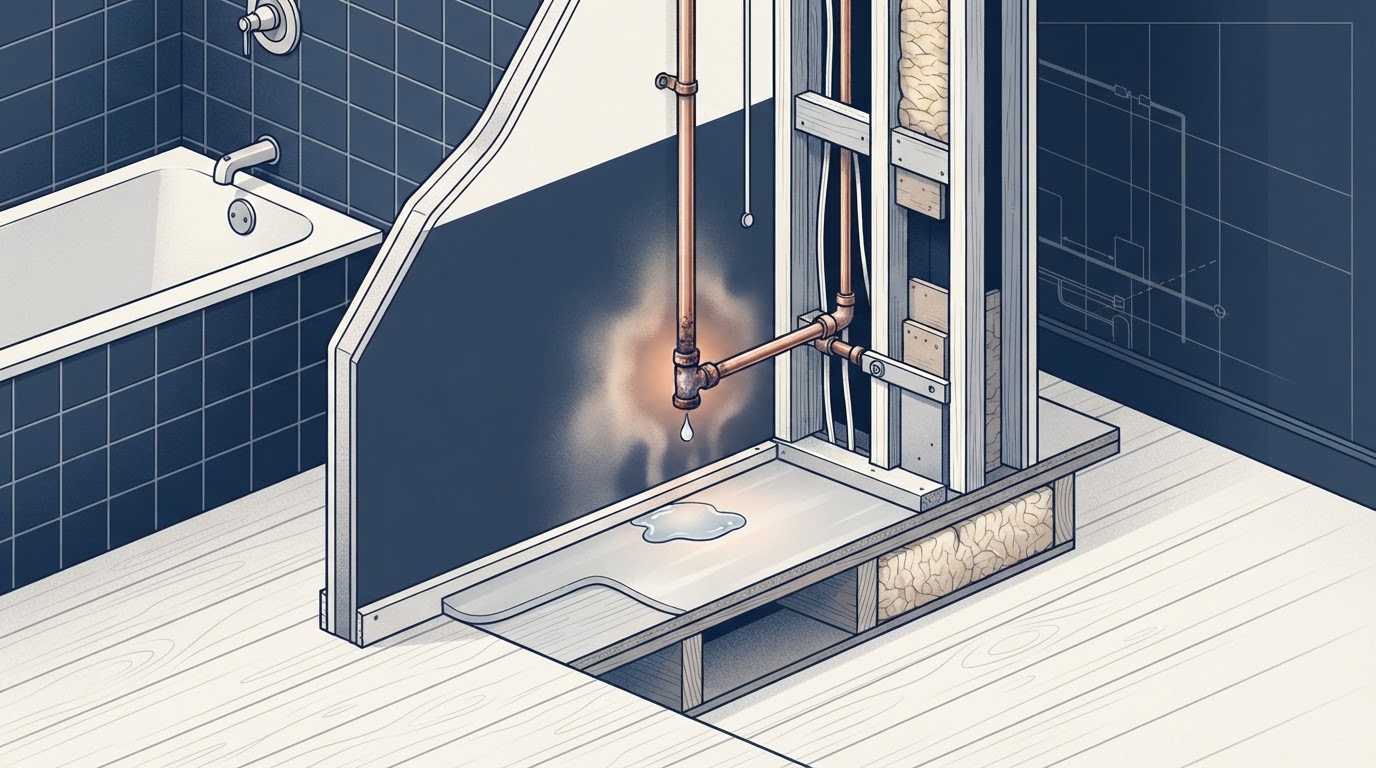
Find it first
Locate the source before opening everything up
The reflex with a leak is to cut into the wall where the water appears. But water travels, so the visible damage and the actual leak are often in different places. Detection aims to pinpoint the source so the opening, if one is needed, is the right one.
It's the difference between a small, targeted repair and tearing into a wall on a guess.
Signs to look for
There's a leak to find
A damp or discolored wall
Moisture or staining on a wall with no obvious spill nearby.
A ceiling stain
A ring or patch on the ceiling, often from a leak above it.
Unexplained water use
A water bill that climbed with no change in habits.
Sound of running water
A faint flow or hiss when nothing is turned on.
Moisture with no source
A spot that's damp for no visible reason.
A warm floor area
A warm patch on the floor can point to a hot-water line below.
Where it could be
The source decides the repair
Where the leak actually is shapes how it's fixed, and detection is what tells you that.
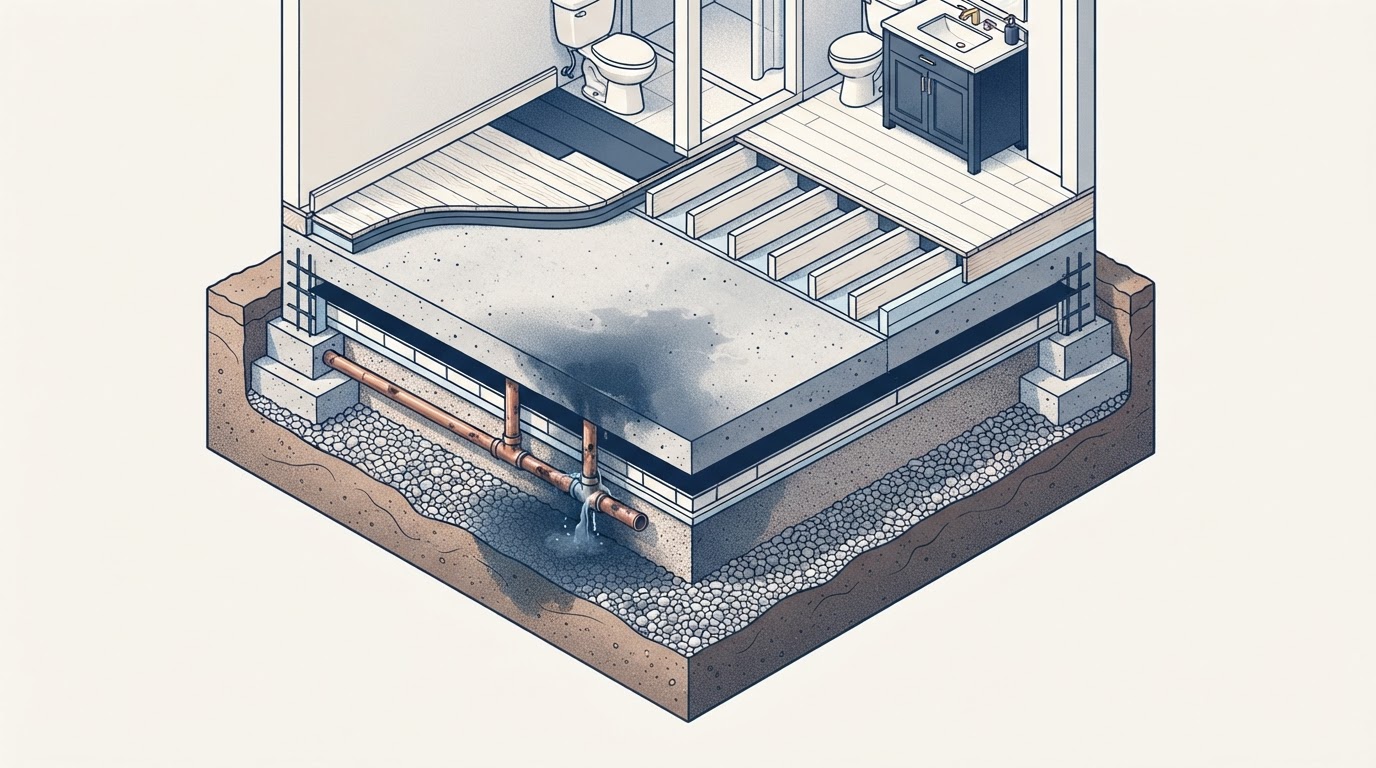
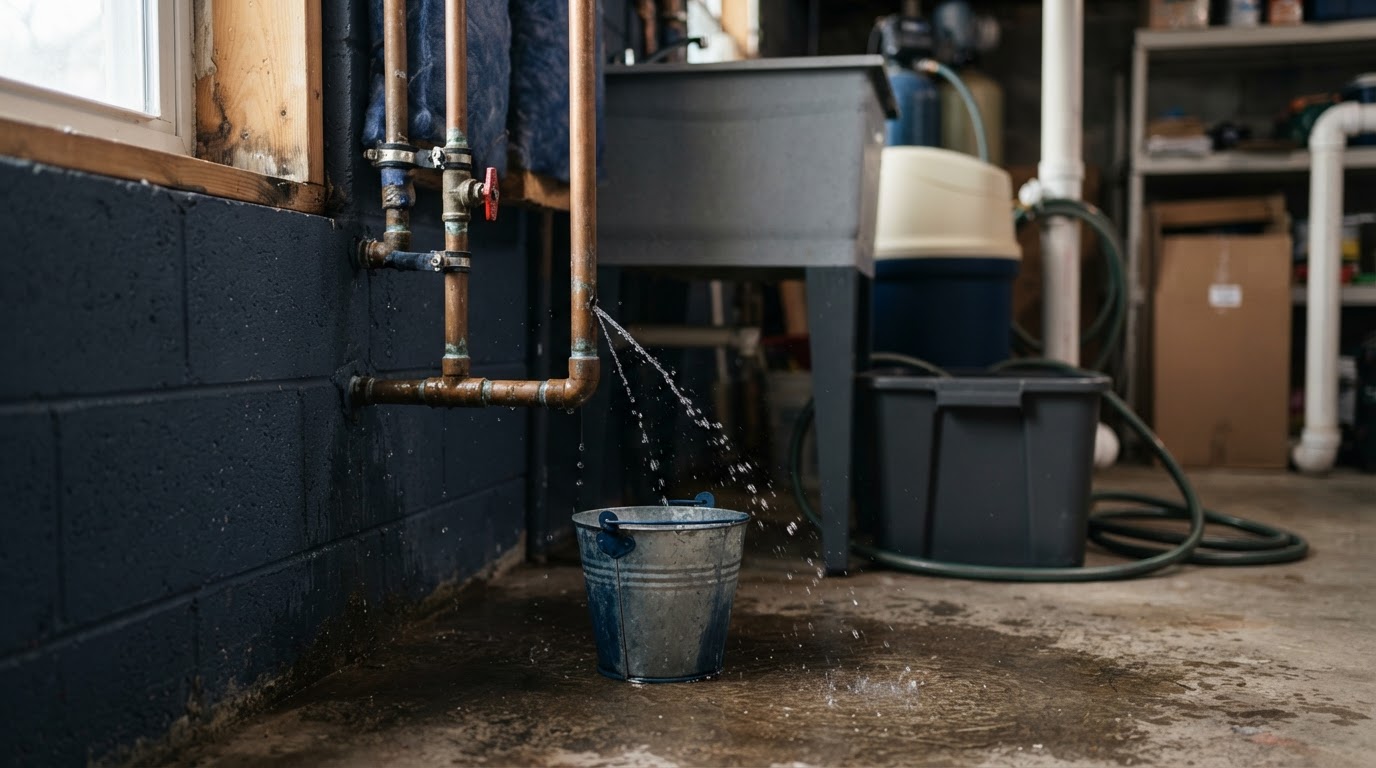

Find where it's actually coming from
Describe the stain, the sound, or the bill, and roughly where it's appearing. That's usually enough to start narrowing down the source before anything gets opened.