Tankless Water Heater Installation
Would tankless actually make sense for your home?
Tankless heats water on demand instead of storing it, which sounds ideal until you ask the questions that decide whether it fits. Demand, household size, fuel, venting, and placement all matter. This page is built to help you weigh them honestly, not sell you a unit.
Tank vs. tankless
Two very different ways to make hot water
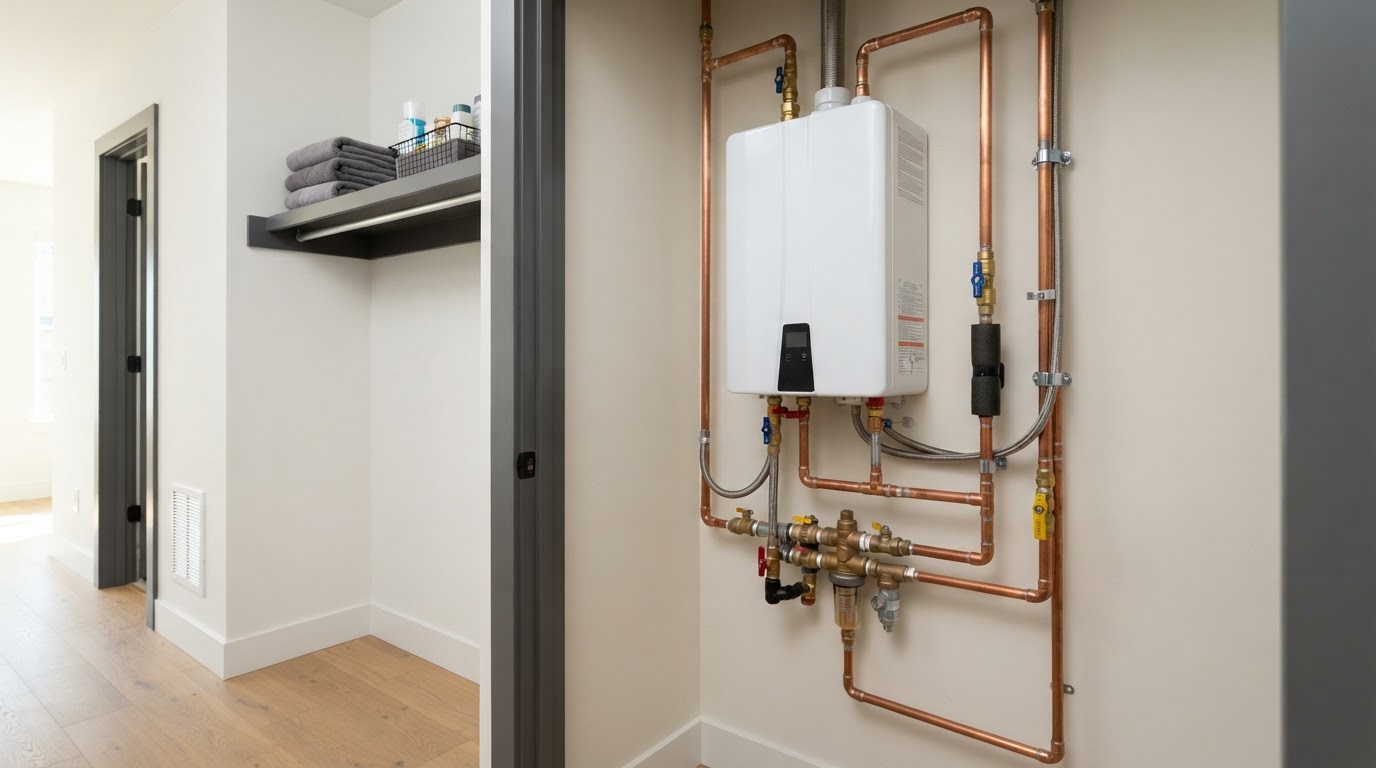
A tank heater keeps a reservoir hot and ready, sized to the household's peak use. A tankless unit heats water as it flows through, so it never runs out, but it can only heat so much at once.
The trade-off is real: endless hot water and no standby loss, against a unit that has to keep up with simultaneous demand and needs the right fuel, venting, and placement to do it.
Fit factors
What decides whether it fits
These are the real questions, not "tankless or not," but whether your home's demand and setup make it a good fit.
Hot-water demand
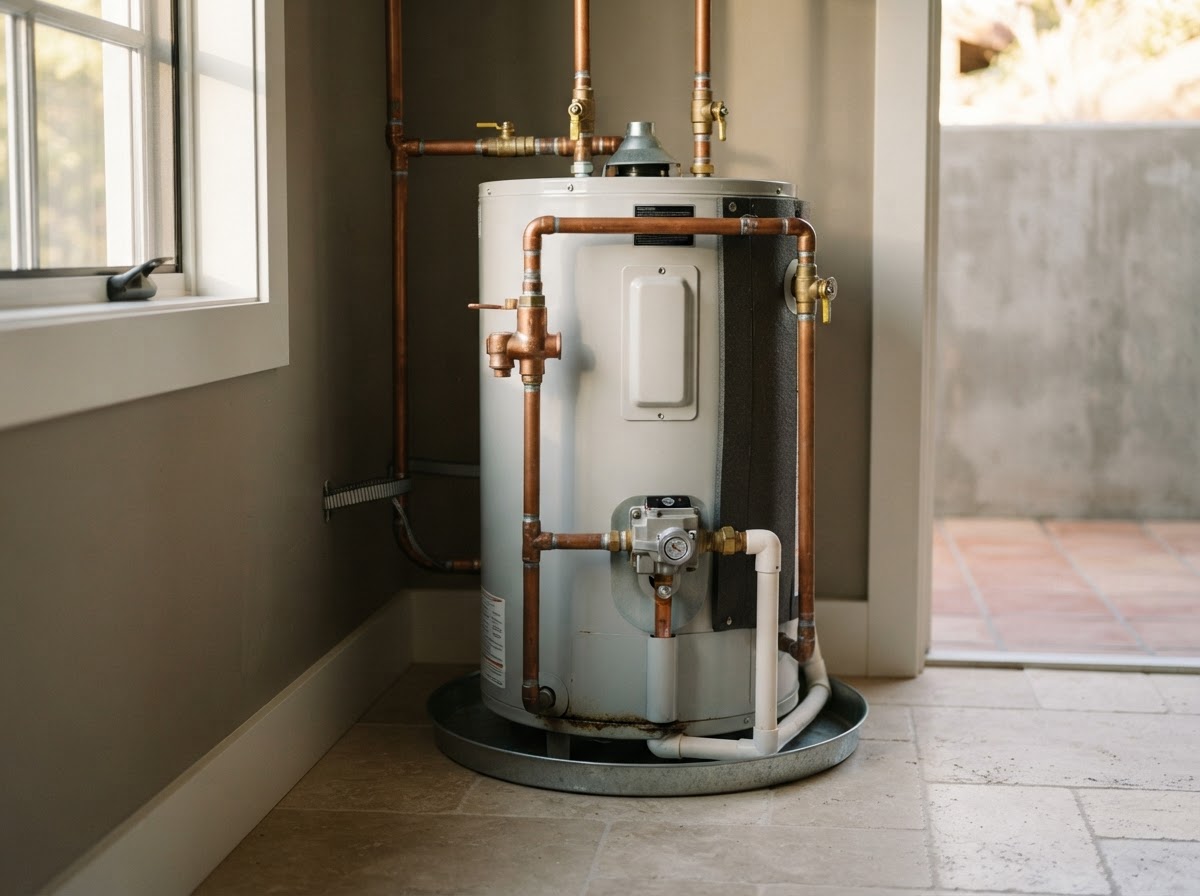
How many fixtures run at once: two showers plus a dishwasher is a different load than one at a time.
Household size & usage
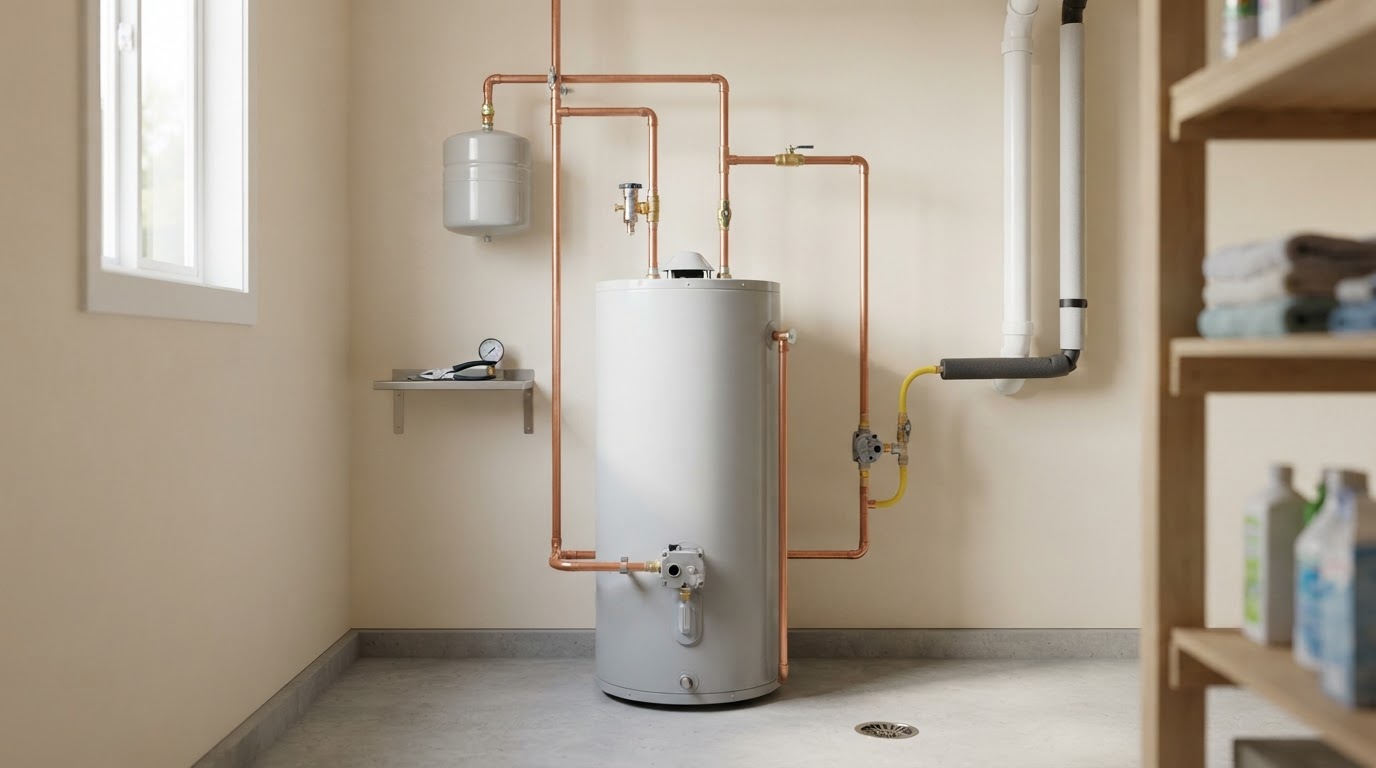
A family with staggered morning routines has different needs than a single-occupant home.
Sizing (GPM)
The unit has to deliver enough gallons per minute at the temperature rise your climate requires.
Fuel type
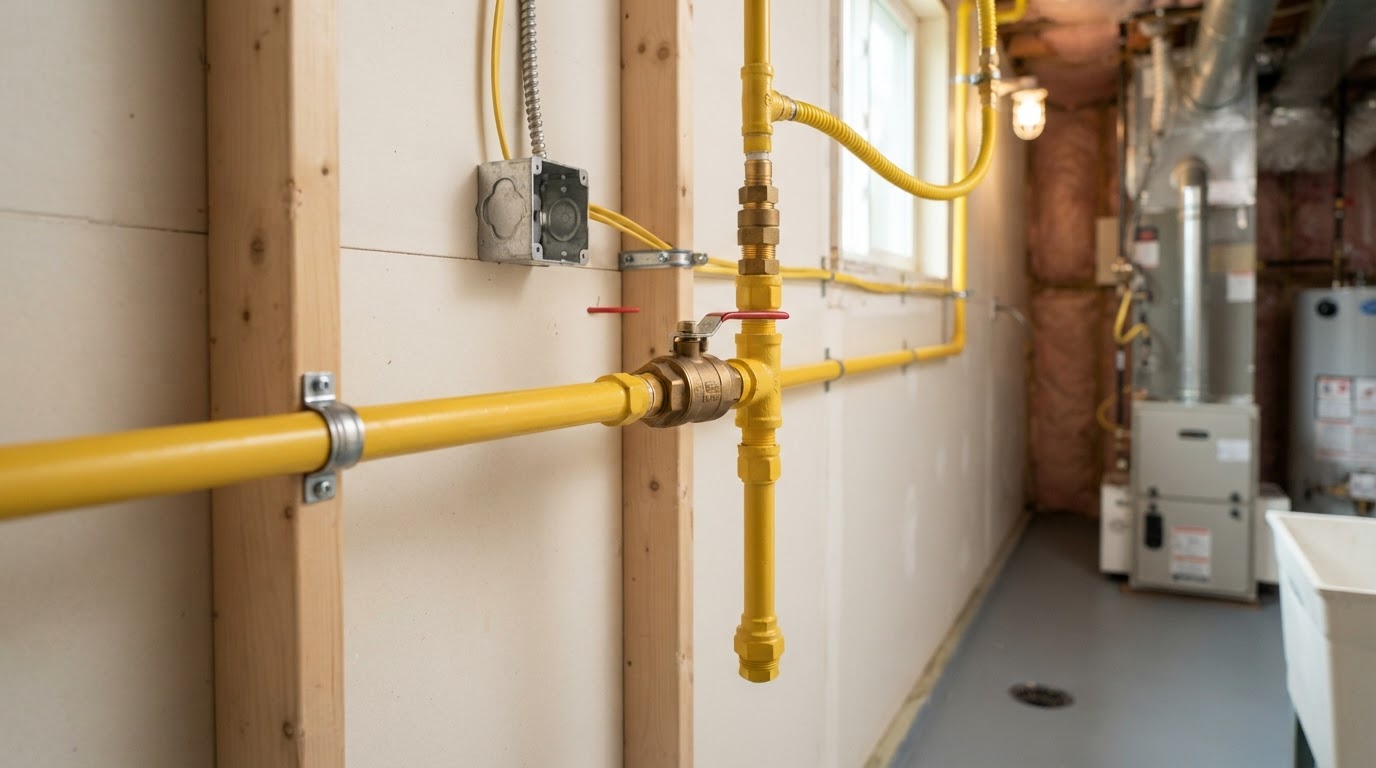
Gas tankless needs adequate gas supply; electric tankless can demand a heavy electrical service.
Venting
Gas units need proper venting through a wall or roof, which affects where they can live.
Placement
Tankless mounts on a wall, freeing floor space, but the location has to meet clearance and access rules.
Honest fit
When tankless makes sense, and when it doesn't
Often a good fit
- Higher demand that a tank keeps running out on
- Adequate gas supply or electrical service for the unit
- A location that meets venting and clearance rules
Often not the right fit
- Low, predictable demand a tank already handles well
- Fuel or electrical service that would need a costly upgrade
- No practical venting or placement path
Maintenance expectations
Tankless units need periodic descaling to clear mineral buildup, more often in hard-water areas. It's straightforward maintenance, but it's part of ownership, not an optional extra.
We don't promise specific efficiency savings or rebates; those depend on your usage, utility, and local programs. If any apply to your situation, they can be confirmed before installation.
Let's see if tankless fits your home
Share your household size, how you use hot water, and what fuel and space you have. That's what actually decides whether tankless makes sense, not a brochure.