Water Heater Installation
What should replace your current water heater?
A new water heater isn't one decision; it's several: tank or tankless, what capacity, which fuel, and where it can live. The right combination depends on your household's actual hot-water demand, not a default size.
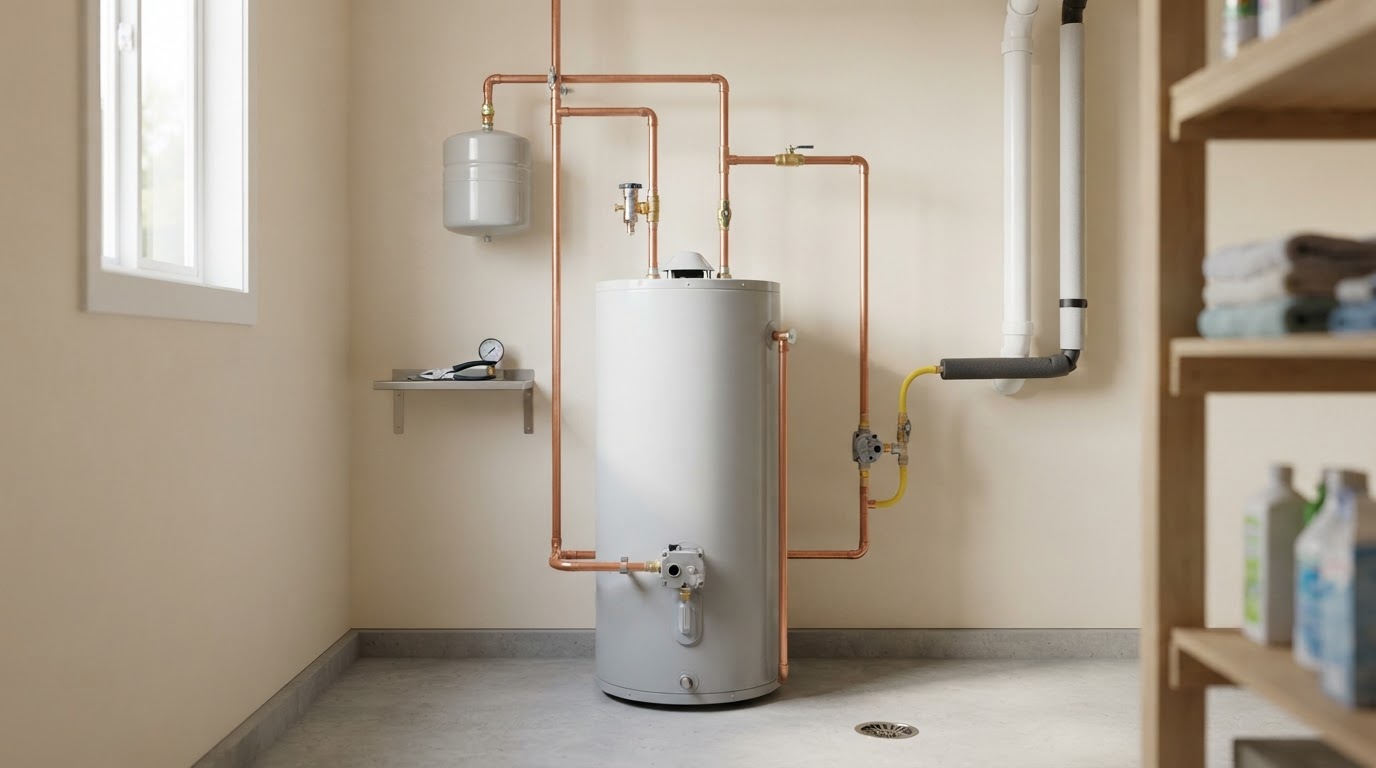
Whether replacement is likely
Signs it's time to replace, not repair
A leaking tank can't be repaired, only replaced. An older unit with repeated component failures is often at the point where repairs stop making sense. And a unit that can't keep up with demand may simply be the wrong size for the household.
Replacement is also worth considering when you want to move from tank to tankless, or upgrade to a more efficient unit that fits your fuel setup.
The decisions
What shapes the installation
Tank vs. tankless
Tank stores a set volume; tankless heats on demand. Each suits different demand patterns and homes.
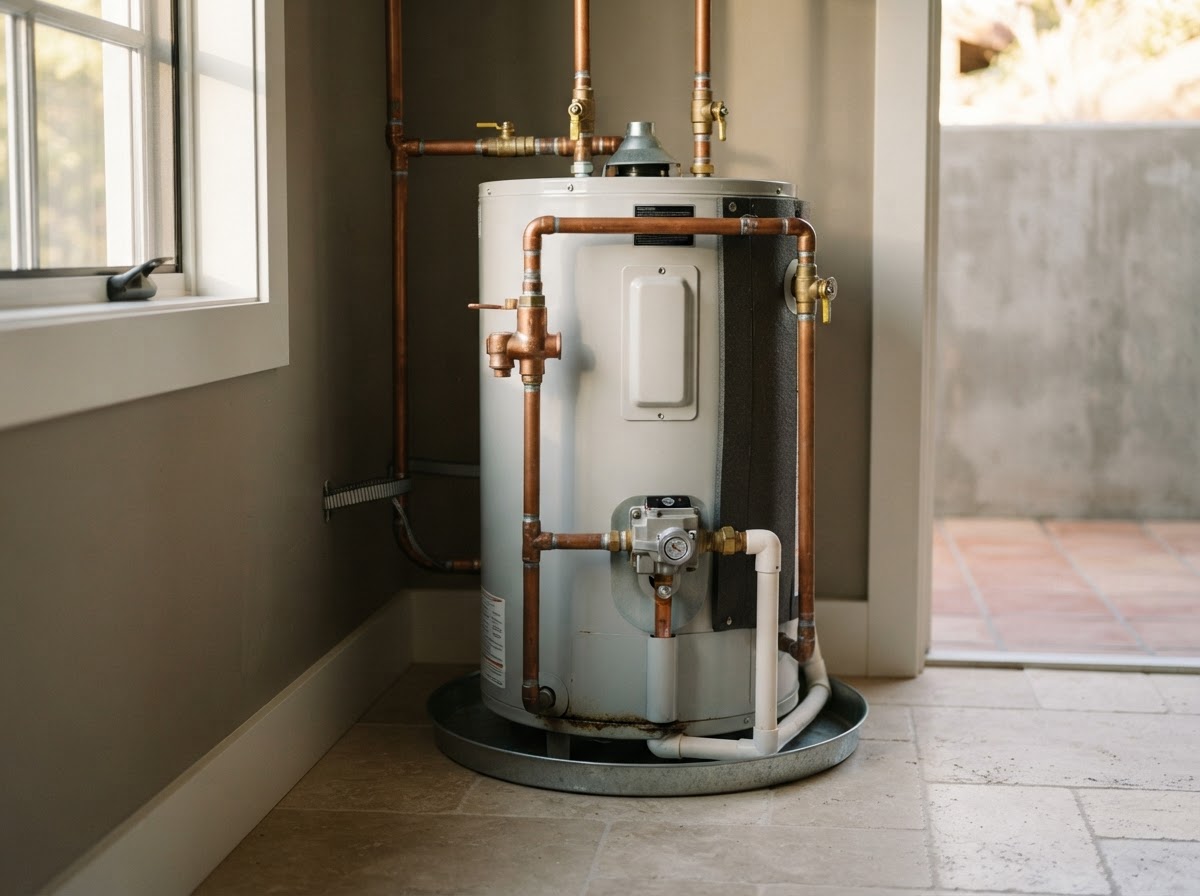
Capacity / size
Sized to the household; too small runs out, too large wastes energy. Demand, not square footage, drives it.
Fuel type
Gas, electric, or propane. What you have, and what's available at the unit, narrows the options.
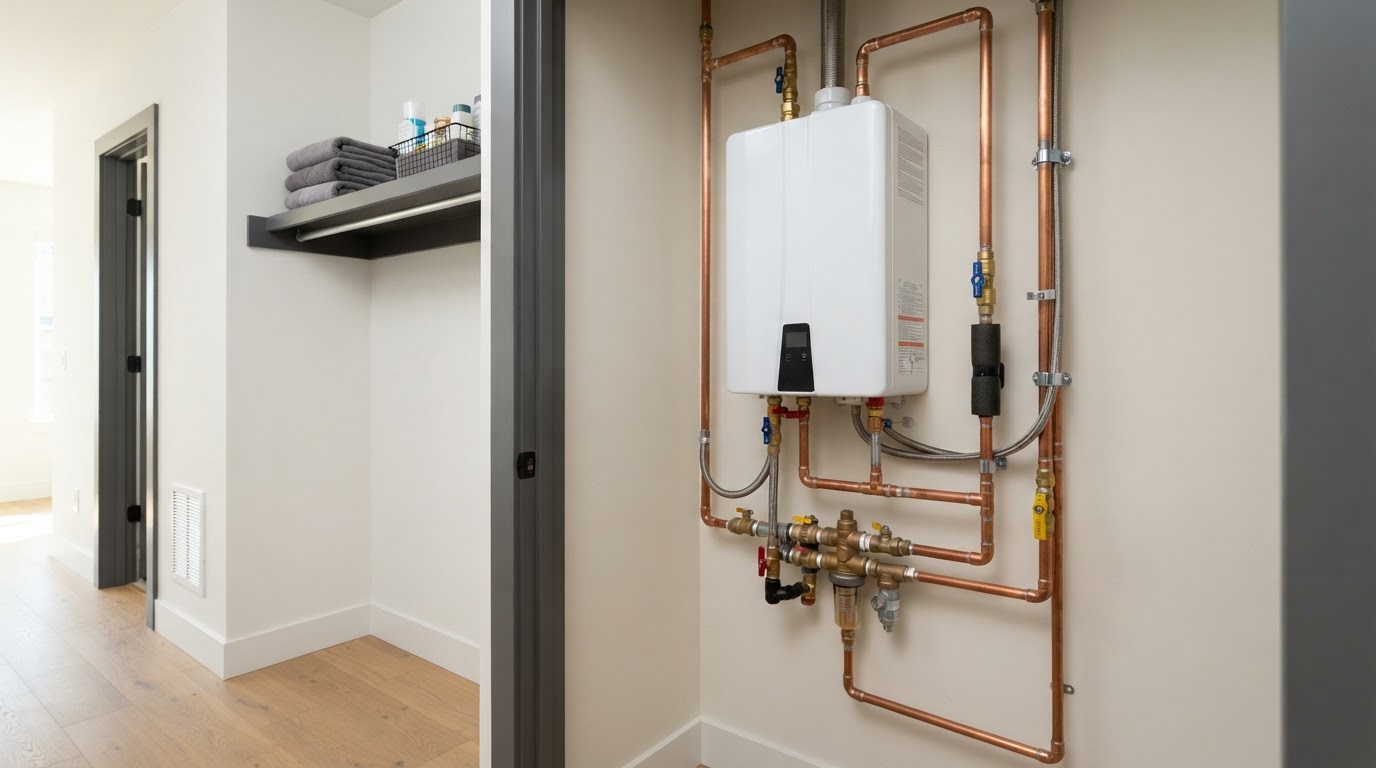
Placement & clearance
Where the unit can live, how much space it needs, and code clearances around it.
The process
What a typical replacement involves
- 1Assess demand
Match capacity and type to how your household actually uses hot water.
- 2Confirm fuel & space
Verify the fuel, venting, and clearances available at the install location.
- 3Remove & install
Drain and remove the old unit, then set and connect the new one to code.
- 4Test & verify
Check for leaks, proper venting, and that hot water recovers as expected.
Considering tankless as the replacement?
If you're already replacing the unit, it's the natural moment to weigh tankless. Whether it fits depends on demand, fuel, venting, and placement, all worth checking before deciding.
Explore your replacement options
Tell us what you're replacing and how the household uses hot water. We'll help you weigh tank vs. tankless, capacity, and fuel, so the new unit actually fits.