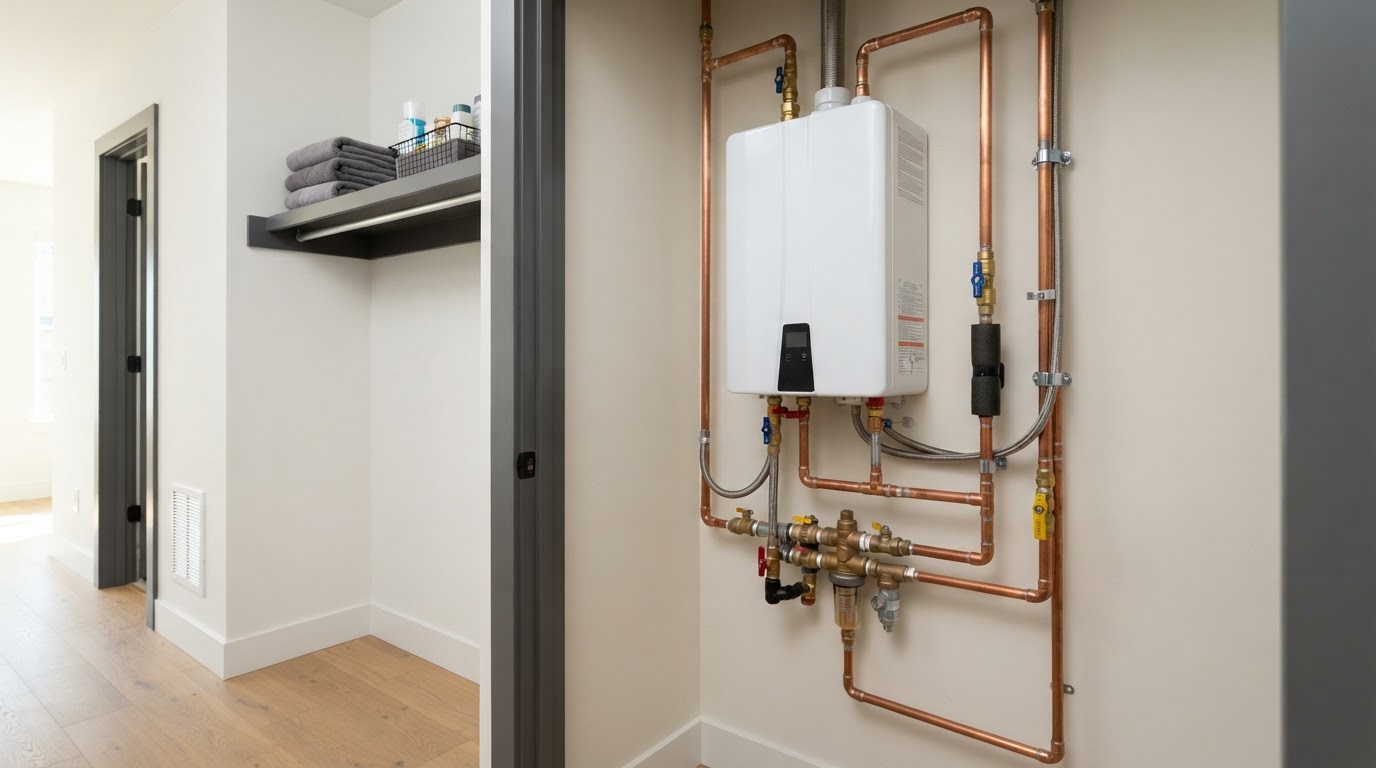
Water Heater Repair
Can this water heater still be repaired?
The first question with a misbehaving water heater is whether it's a fixable component, like a valve, a thermostat, or an element, or a sign the unit has reached the end. The symptom tells you a lot about which one it is.
A leaking tank or a unit that smells of gas is a safety concern, not just a repair. If you smell gas, leave the area and follow your gas utility's instructions first. Water heater repair involves electricity and gas, so it's not a safe DIY project.
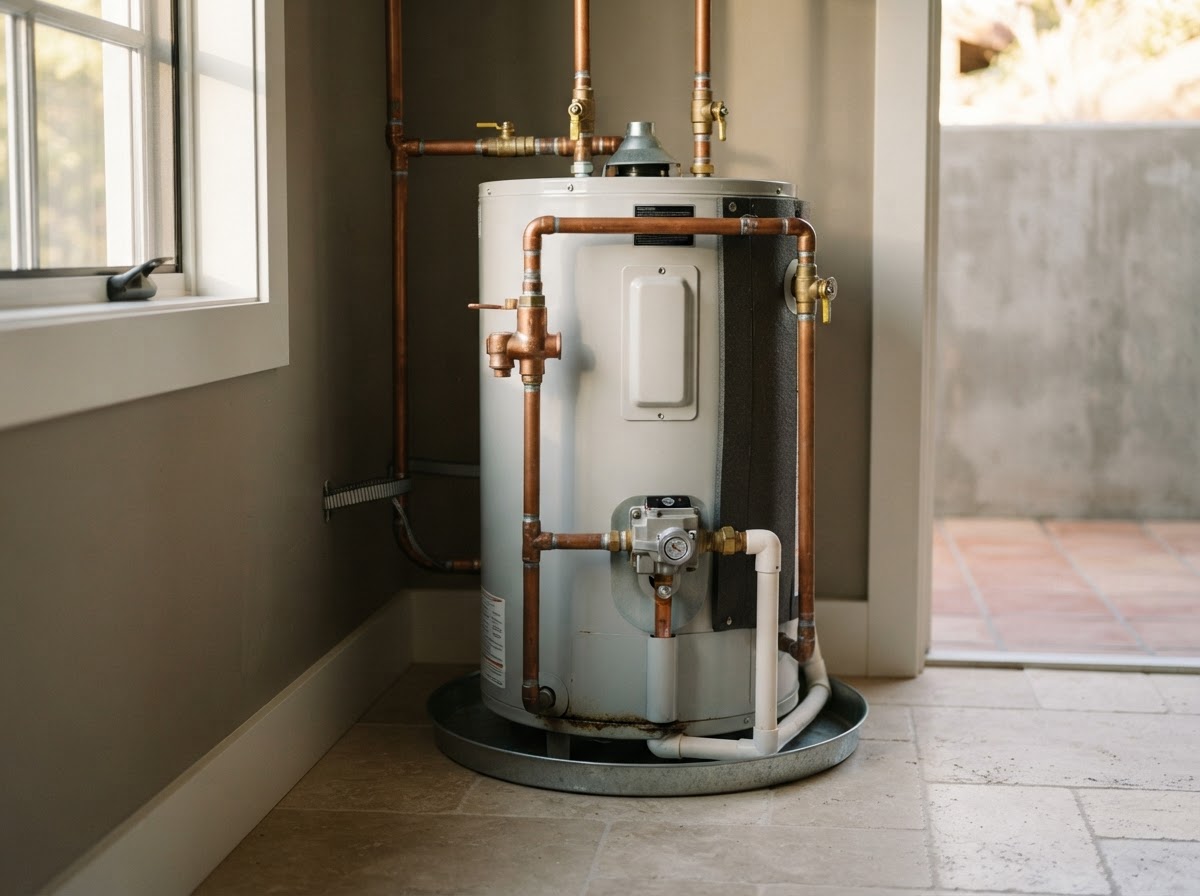
What's it doing?
Six common symptoms
No hot water at all
Could be the pilot, the heating element, or the thermostat. Often a component, but it depends on the unit's age and type.
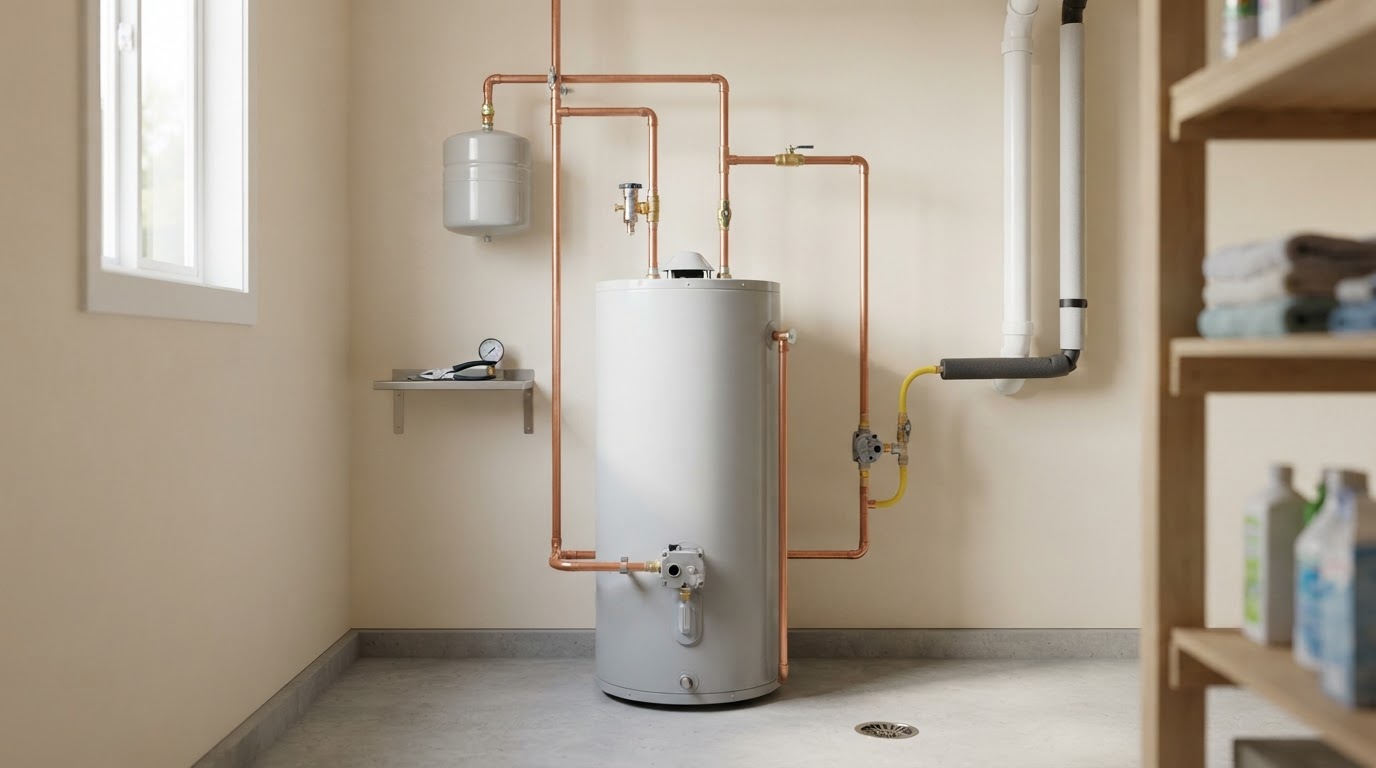
Runs out quickly
A dip tube, a sediment-filled tank, or an undersized unit for the household. Sometimes repairable, sometimes a sizing problem.
Rumbling or popping noises
Usually sediment buildup at the bottom of a tank. Flushable in some cases; in others it points to a tank nearing failure.
Water leaking from the unit
A leak from a fitting may be repairable. A leak from the tank itself usually means replacement, not repair.
Discolored or smelly water
Can be the anode rod or sediment. Sometimes a new rod solves it; sometimes the tank is the issue.
Inconsistent temperature
Often a thermostat or mixing valve; both are components that can be replaced on a sound unit.
The decision
Repair, or replace?
Often worth repairing
- A single failed component on an otherwise sound unit
- A unit still within a reasonable service life
- Symptoms that point to a replaceable part, not the tank
Often time to replace
- A leak from the tank itself, not repairable
- Repeated component failures on an aging unit
- A unit that can't keep up with household demand
Not sure if it's a fix or the end?
Describe what the unit is doing and how old it is. That's usually enough to tell whether a component repair makes sense, or whether replacement is the better call.