Garbage Disposal Repair
Is the disposal fixable, or is it time to replace it?
Disposals fail in a handful of predictable ways: a jam, a hum with no spin, no power at all, or a leak underneath. Some are a quick fix; others mean the unit has reached the end. The symptom usually tells you which.
By symptom
Match the symptom to the likely fix
A jam is often a foreign object or buildup that can be cleared. A hum with no spin usually points to a stuck motor or a failed capacitor. No power at all may be the disposal's internal breaker or the outlet underneath the sink.
A leak, though, can mean a failed seal, or a cracked housing that calls for a new unit.
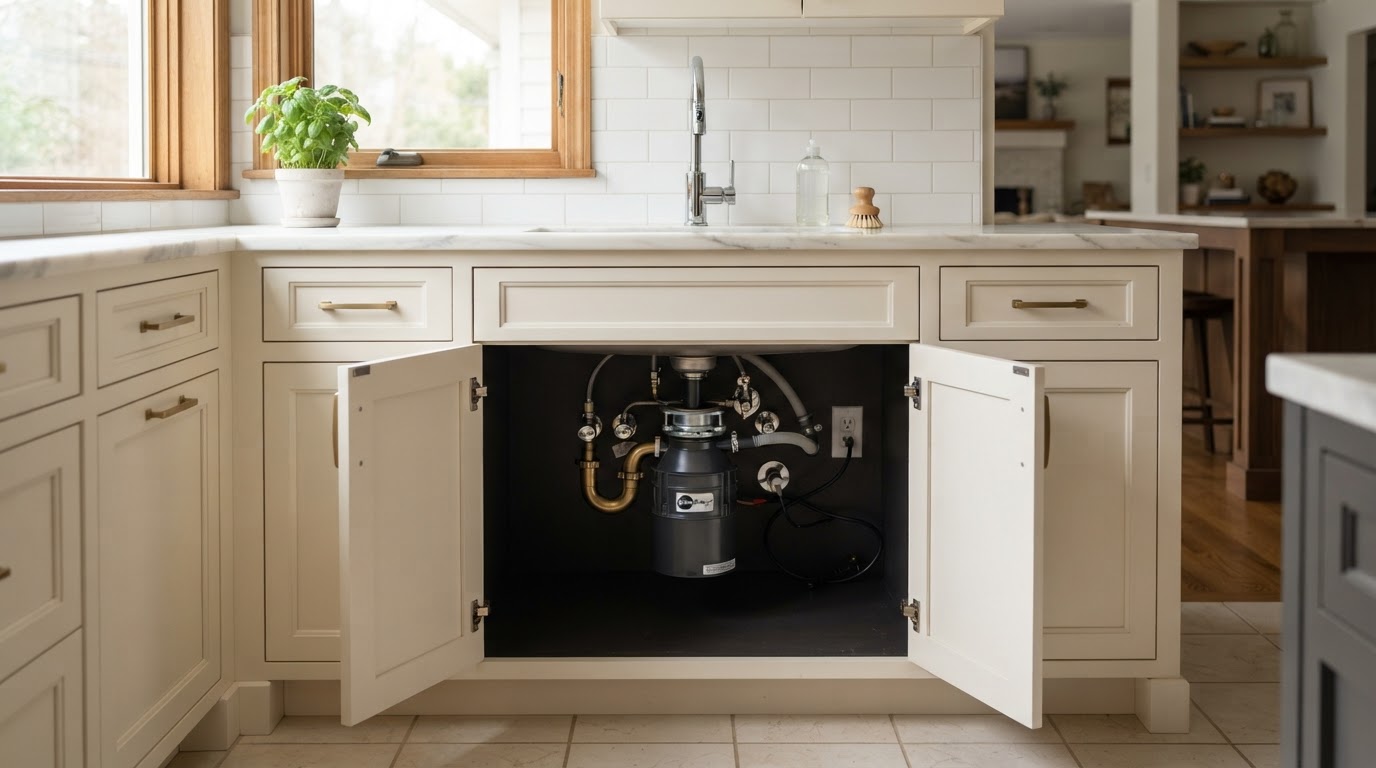
Common symptoms
Jam / won't spin
Often a foreign object or buildup. Many can be cleared safely, after the power is off.
Often repairableHums but doesn't turn
A stuck impeller or a failed capacitor inside the unit.
Sometimes repairableNo power
The disposal's reset button, the outlet, or the unit's wiring.
Worth diagnosingLeaking underneath
A failed seal at a connection, or a cracked housing. Seals can be replaced; cracks usually can't.
Depends on sourceDrains slowly
May be the disposal's grinding chamber, or a clog further down the line.
Worth diagnosingFrequent resets
A unit that keeps tripping its reset is often overheating or near end of life.
Often means replaceSafety note: never reach into a disposal without confirming the power is off at the switch and the circuit. Clearing a jam or replacing a unit is not a safe DIY project without that step.
Repair or replace?
Usually worth repairing
- A clearable jam on an otherwise sound unit
- A failed connection seal that can be replaced
- A first-time reset issue with a simple cause
Often means replacing
- A cracked housing causing the leak
- A motor or capacitor failure on an older unit
- Repeated resets or chronic jams from a worn unit
Tell us what the disposal's doing
Describe the symptom, whether jam, hum, leak, or no power, and the unit's rough age. That usually determines whether it's a fix or a replacement.